

Cinema and interior design: building spaces to be lived in or filmed
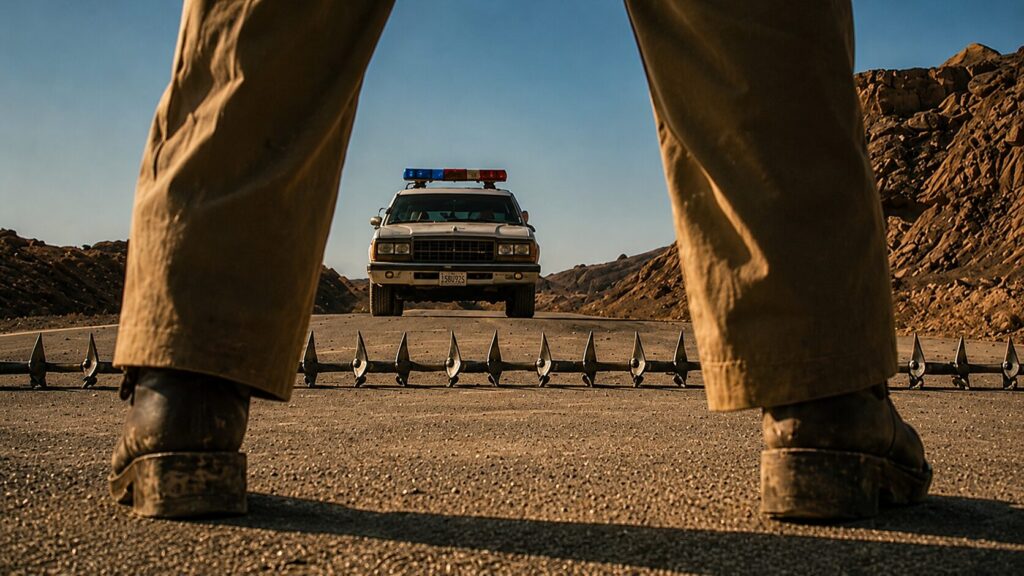
Cinema and design share the same essence: both build atmospheres capable of moving people. The great difference lies in time. Architecture and interior design remain. Cinema, on the other hand, exists in the ephemeral. Everything happens fast: decisions, transformations, construction and dismantling. Every space is born to be captured by the camera and to disappear after the last shot. That condition demands precision, intuition and craft. Designing for cinema means working with another language. Spaces are no longer created only for those who inhabit them, but also for those who observe them through a lens and later through a screen. Light, texture, colour or perspective take on a different narrative dimension in front of the camera. In silent cinema, gesture and make-up amplified emotion. Today, space still serves that same function: reinforcing the story, revealing tension, building memory or anticipating the future before a character even speaks. Interior design, art direction and construction of film sets Every detail tells a story. Our experience within the Art Department covers art direction, design, planning and construction. And, as in any creative discipline, each project demands its own language. Designing a period film is not the same as designing a dystopian universe or a futuristic fiction. Behind every production there is a complex network of specialists: colourists, costume designers, model makers, props, special effects or technical supervisors. And, of course, something as decisive as the budget also has an influence. Even so, the craft remains. The designer, architect, landscape architect or technical director remains the one who connects creativity, problem-solving and technique to turn an idea into a believable space. We want to open a small window onto that cinematic universe through three projects on which we have collaborated. Atolladero: retro-futurism in the desert With a dystopian narrative set in the Mexico of the year 2050, Atolladero —directed by Oscar Aibar— explored a rough, surreal aesthetic deeply influenced by comics. The landscape of the Bardenas Reales of Navarre became an almost prophetic setting: desert, heat and decay as a visual anticipation of an extreme future. Among the most memorable elements were a convertible Cadillac drawn by horses, a wandering preacher and the magnetic presence of Iggy Pop in the middle of nowhere. The hacienda and the petrol station One of the main sets was a Mexican hacienda with a Texaco petrol station frozen in neon time. Arcades, weathered sky, dust and desert built an atmosphere between western and science fiction. From a technical point of view, the project was an exercise in rapid problem-solving and material creativity. We used prefabricated workshop boxes and expanded polyurethane sprayed on site to build volumetric façades with rough, patinated finishes that, in front of the camera, acquired enormous visual power. In cinema, permanence often matters less than the ability to generate truth for a few seconds. The police car The police vehicle was another of the film’s great protagonists. For two months, two people worked exclusively on its interior to give it an imaginary, retro and strangely bizarre technology. The result was imperfect, exaggerated and absolutely cinematic. VAMPIRE ACADEMY: BUILDING AN IMAGINARY SOCIETY. Vampire Academy took us into a large-scale international production, where contemporary language coexisted with a fictional society of aristocratic, ceremonial aesthetics. In projects of this kind, the challenge is not only the final result. It is also the ability to coordinate enormous technical teams, absorb constant changes and respond quickly to the needs of a living, changing production. Hollywood works like this: an immense amount of material is shot to decide afterwards which stories will continue to grow and which will disappear. But even when the final result changes, the process still has extraordinary value. Bringing together more than 400 professionals in Olite, Navarre, for almost a year was a technical and human experience that is hard to forget. Our head producer, Jose Luis Escolar, who specialises in large international productions, led a complex deployment together with Llorenç Miquel as Line Producer. For our part, Genís Solé worked in the Design department and Jordi Canora in Art Supervision. The main set The large exterior set was built on a former landscaped enclosure belonging to the Franciscan congregation. In a space equivalent to several football pitches we designed and built a complete Colegio Mayor: architecture, lighting, urban planning and landscaping integrated into a single visual universe. Subsequently, the interior spaces were transformed into bedrooms, ceremonial halls, sports facilities and various recurring settings of the series. El Nido: building to disappear On El Nido, directed by Hugo Stuven, we collaborated with Ana Alvargonzález on the construction of the main set: an isolated cabin in the mountains. Our work focused on technical direction and exterior construction, while the interior was developed later on a studio set. The brief was to build two timber structures in a natural setting near Barcelona, age them artificially, blend them visually into the forest and finally prepare them to be destroyed in front of the camera. Everything had to look old, damp and abandoned. We worked with a team equipped with chainsaws, ropes, chisels and hand tools to build, in barely three weeks, a completely believable result. Wood has something deeply cinematic about it. It is light, quick, flexible and emotional. It allows structures to be raised at enormous speed and visually transformed with few resources. What cinema teaches us about design That is exactly what cinema is like: sometimes it requires complex technology and millimetric planning; other times, simple tools, intuition and craft are enough to create something believable. Because, in the end, as in design, what matters is not only what is built. It is what it manages to make you feel.
Cinema and interior design: building spaces to be lived in or filmed Read Post »